
Dubai Logistics Outsourcing to India
Why Dubai Logistics Companies Are Outsourcing Back-Office Operations to India
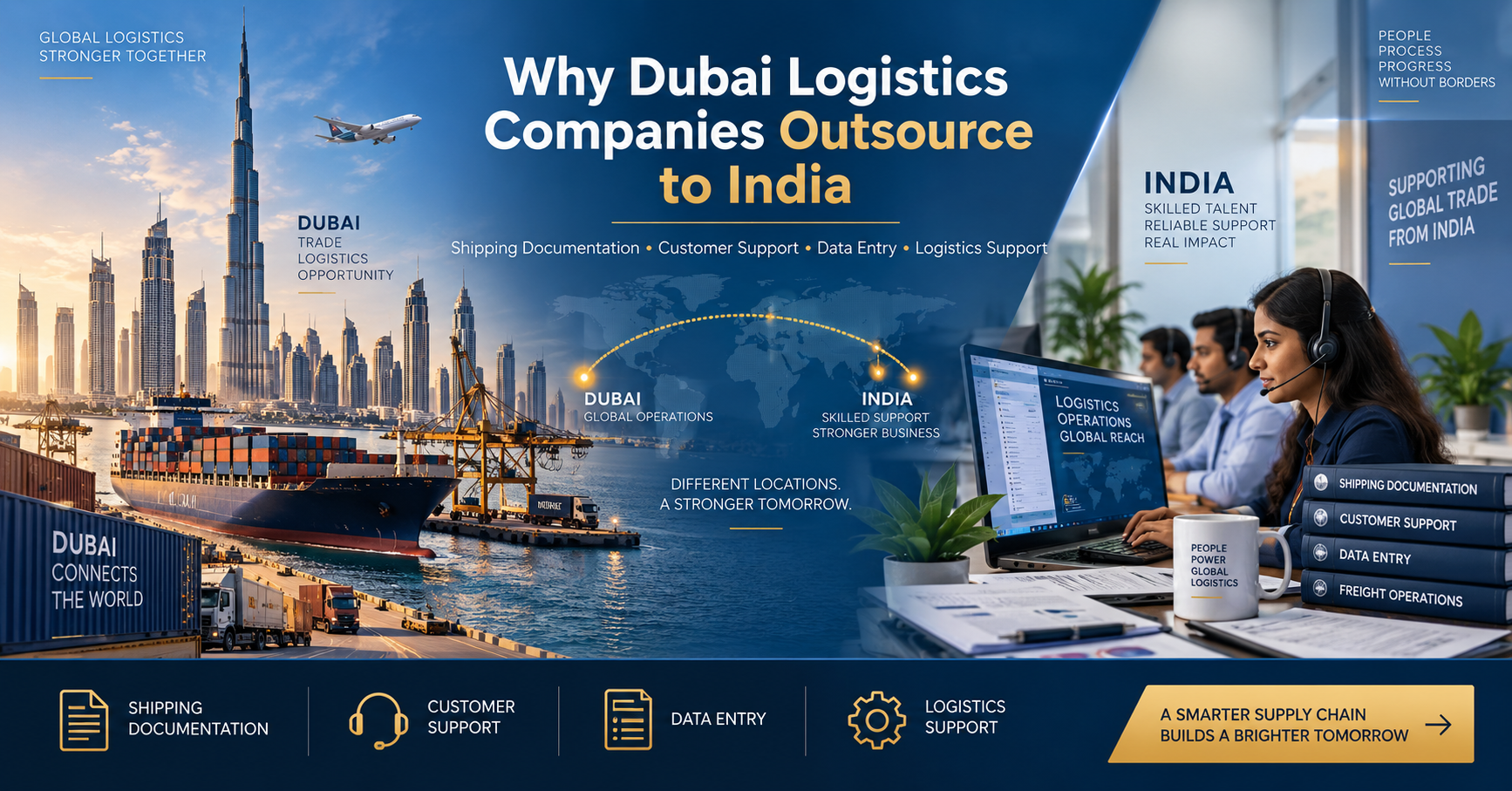
Dubai has become a major hub for shipping, freight forwarding, logistics, and international trade. As logistics companies continue to expand their operations, managing documentation, customer communication, data entry, and administrative work can become increasingly demanding.
To manage these activities efficiently, many Dubai logistics companies are exploring back-office outsourcing to India.
Outsourcing allows logistics businesses to access trained professionals, manage routine operational tasks, and create more time for their internal teams to focus on customers and business development.
What Is Back-Office Outsourcing in Logistics?
Back-office outsourcing means assigning selected administrative and operational activities to an external support team.
For logistics and freight forwarding companies, outsourced activities can include:
- Shipping documentation
- Import and export documentation
- Data entry and data processing
- Shipment tracking
- Customer support
- Freight rate enquiries
- Quotation preparation
- Order and booking support
- Telesales and lead follow-up
- Finance and administrative support
- Procurement assistance
A dedicated team can work according to the company's processes and communicate with customers, suppliers, carriers, and other logistics partners.
Why Are Dubai Logistics Companies Outsourcing to India?
1. Access to Skilled Professionals
India has a large workforce with experience in customer service, documentation, data management, finance, technology, and business process operations.
For logistics companies, this provides access to trained employees who can support day-to-day operational requirements.
Instead of spending significant time recruiting and training an in-house team for every function, businesses can outsource specific processes to experienced support professionals.
2. Cost Management
Maintaining an in-house back-office team involves several expenses, including recruitment, salaries, office space, equipment, employee benefits, and training.
Outsourcing selected activities to India can provide businesses with an alternative way to manage these operational expenses.
The goal is not simply to reduce costs but to build a support model that provides the required services while maintaining operational efficiency.
3. Focus on Core Logistics Operations
Freight forwarding involves many time-consuming administrative tasks.
When internal employees spend most of their time handling documentation, data entry, follow-ups, and routine customer enquiries, they may have less time for business development and customer relationships.
An outsourced back-office team can handle repetitive processes, allowing the core team to concentrate on:
- Customer relationships
- Business development
- Sales
- Freight negotiations
- Strategic planning
- Operational decision-making
4. Shipping Documentation Support
Accurate documentation is essential in international logistics.
Depending on the business requirements, an outsourced team can assist with documents such as:
- Bills of Lading
- Delivery Orders
- Arrival Notices
- Commercial Invoices
- Packing Lists
- Import documentation
- Export documentation
- Shipment-related records
Having dedicated documentation support can help logistics companies organise information and maintain consistent processes.
5. Customer Support and Communication
Customers expect timely updates about their shipments.
An outsourced customer support team can assist with routine enquiries, shipment updates, booking information, documentation status, and follow-ups.
This allows the internal logistics team to focus on more complex operational matters while customers continue to receive regular communication.
6. Telesales and Lead Generation
Growing a logistics business requires a consistent sales pipeline.
Outsourced telesales teams can support freight forwarders by contacting potential customers, following up on enquiries, introducing logistics services, and maintaining lead databases.
This can help companies create a structured process for lead generation and follow-up without requiring the entire sales function to be managed internally.
7. Flexible and Scalable Support
Logistics businesses may experience changes in workload based on shipment volumes, customers, routes, and business seasons.
An outsourcing model can provide flexibility when additional operational support is required.
Businesses can start with specific processes and expand the scope of support as their requirements increase.
8. India-Dubai Business Compatibility
India and Dubai have strong commercial and trade connections.
For logistics businesses, an India-based support team can coordinate with Dubai operations using email, phone, WhatsApp Business, CRM platforms, ERP systems, Microsoft Teams, and other digital communication tools.
Clear processes, defined responsibilities, and regular reporting are important for maintaining smooth coordination between the teams.
What Logistics Tasks Can Be Outsourced?
Dubai-based logistics companies can outsource a wide range of back-office activities, including:
Documentation
Preparation and processing of shipping and logistics documents.
Data Entry
Updating shipment information, customer records, quotations, and operational databases.
Customer Support
Handling routine customer enquiries and providing shipment-related updates.
Operations Support
Assisting with bookings, shipment tracking, coordination, and follow-ups.
Telesales
Lead generation, customer outreach, enquiry follow-up, and appointment coordination.
Finance Support
Administrative finance tasks and data processing based on the company's requirements.
Procurement Support
Supplier communication, quotation collection, purchase-related administration, and follow-up activities.
How to Choose a Logistics Outsourcing Partner
Before outsourcing back-office operations, logistics companies should evaluate several factors:
- Experience in shipping and logistics
- Knowledge of freight forwarding processes
- Documentation expertise
- Communication capabilities
- Data security practices
- Reporting procedures
- Technology and software compatibility
- Staff training
- Scalability
- Understanding of Dubai business requirements
A suitable outsourcing partner should operate as an extension of the company's existing team rather than simply functioning as an external service provider.
Conclusion
Outsourcing back-office operations to India can provide Dubai logistics and freight forwarding companies with access to skilled support, flexible resources, and dedicated assistance for routine operational activities.
From shipping documentation and data entry to customer support, telesales, and logistics coordination, outsourcing can help businesses manage essential processes while allowing their internal teams to focus on customers and growth.
For Dubai logistics companies considering outsourcing, the key is to identify the right processes, establish clear workflows, and work with a support partner that understands the requirements of the shipping and freight forwarding industry.
Logistics Back-Office Support from OceanDesk Support
OceanDesk Support provides back-office support for shipping, freight forwarding, NVOCC, and logistics businesses, including documentation, operations, customer support, data entry, telesales, finance, and procurement assistance.